How do you find rare aquatic species in remote forest streams—without disturbing them?
In the summer and fall of 2024, scientists used a powerful tool called environmental DNA (eDNA) to help answer that question in the Upper Clackamas River watershed. This project, led by the U.S. Forest Service in partnership with the Clackamas River Basin Council (CRBC), Oregon Department of Fish and Wildlife, and U.S. Fish and Wildlife Service, focused on species that are critical to the health of the watershed—but are often hard to see.
What is eDNA?
All living organisms shed genetic material into their environment through skin cells, mucus, or waste. By collecting and filtering stream water, scientists can analyze this DNA to determine whether a species is present—without needing to capture or even see the animal.
This makes eDNA especially valuable for monitoring rare, sensitive, or elusive species in cold, forested waters.
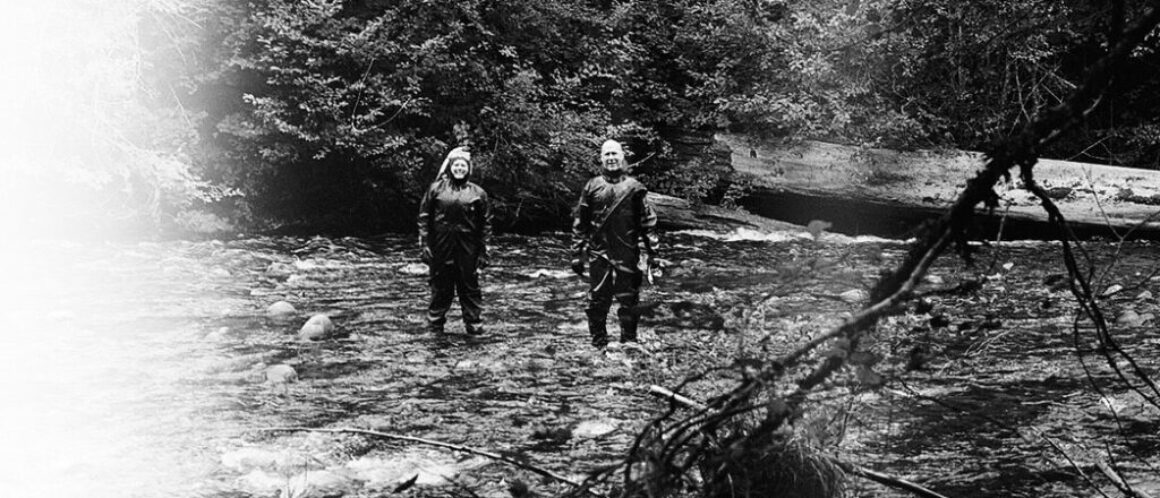
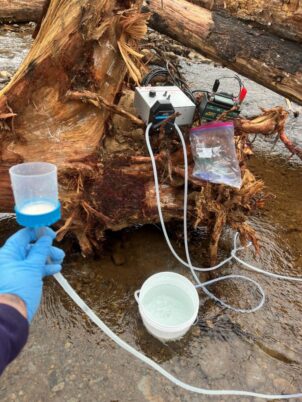
Photo: US Forest Service personnel use eDNA sampling equipment along the upper Clackamas in 2024.
Why the Upper Clackamas?
The Upper Clackamas River basin provides critical habitat for Endangered Species Act–listed salmon and steelhead. It is also home to other species of conservation concern, including:
-
Bull trout
-
Pacific lamprey
-
Western pearlshell mussels
-
Western ridged mussels
Many of these species play important ecological roles—filtering water, supporting food webs, and even helping reduce predation pressure on salmon.
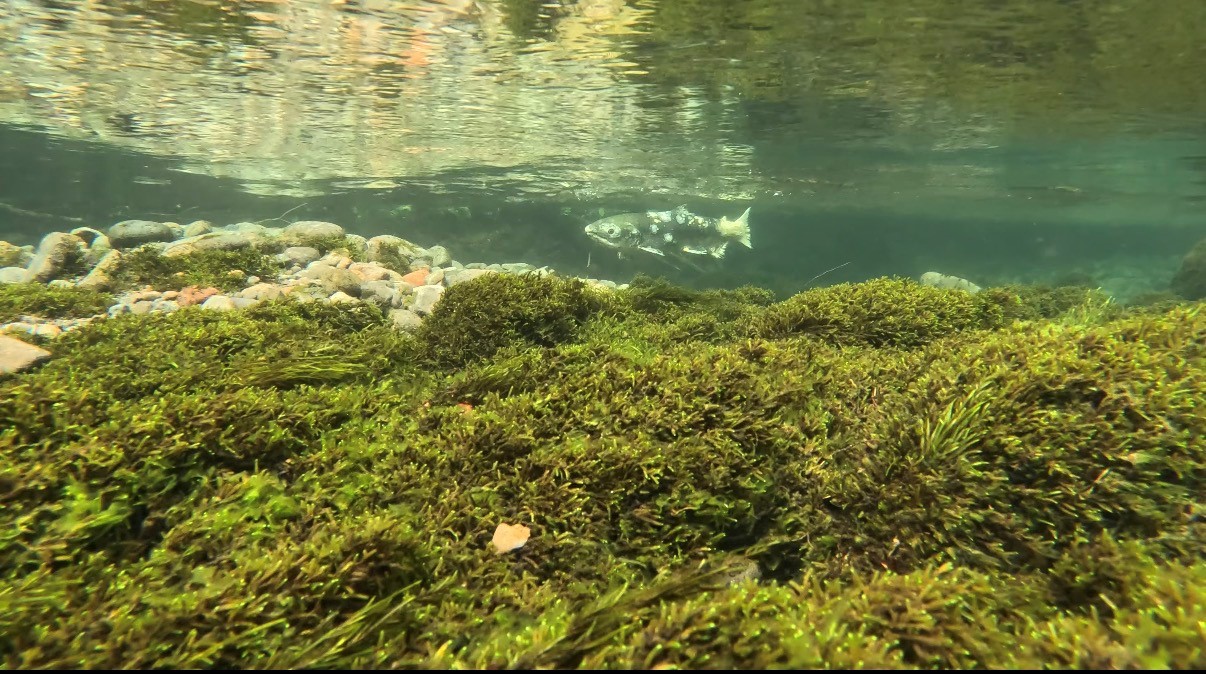
Photo: a spring Chinook salmon and her redd in the upper Clackamas watershed.
What did scientists do?
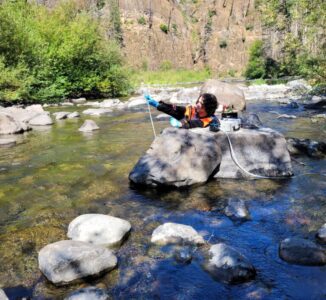
Forest Service staff spent nine days in the field collecting 25 eDNA samples across tributaries and the mainstem of the Upper Clackamas. At some sites, snorkel surveys were also conducted to visually observe fish and mussels.
All water samples were analyzed at a national genomics laboratory using species-specific tests.
What did we find?
The results revealed a complex and evolving picture:
-
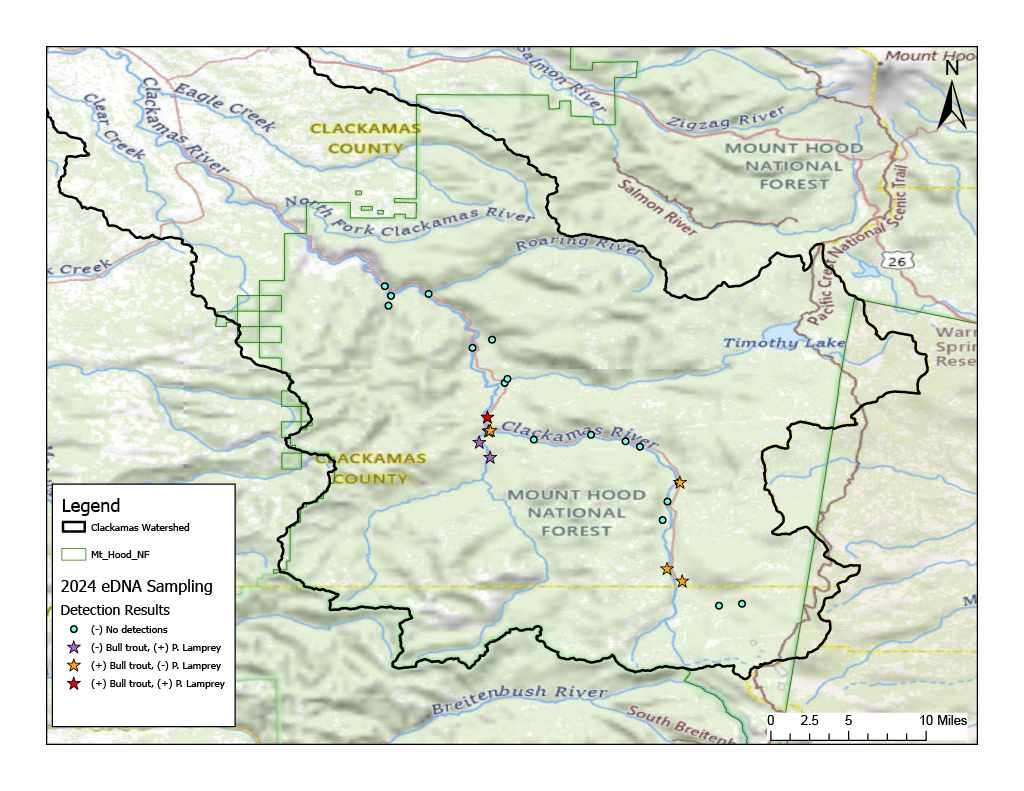
Bull trout were detected at five locations, confirming continued use of multiple streams by this reintroduced and sensitive species.
-
Pacific lamprey were detected at four locations, including areas upstream of where their current distribution was previously uncertain.
-
Freshwater mussels were not detected at any sampling sites.
Not detecting a species does not necessarily mean it is absent. Instead, these results provide an important baseline and help guide where future surveys and restoration efforts should focus.
Image: distribution map showing eDNA detections of Pacific Lampray and Bull Trout in the upper Clackamas watershed in 2024.
Why does this matter?
Understanding where species occur, and where they may be struggling, helps land managers and restoration practitioners make better, more informed decisions. The findings from this project will:
-
Support recovery planning for sensitive species
-
Inform future habitat restoration projects
-
Help prioritize additional monitoring and research
Just as importantly, this work highlights how partnerships and science-based tools can deepen our understanding of the Clackamas watershed.
As we continue to learn more about what lives beneath the surface, projects like this help ensure the Upper Clackamas remains a resilient home for fish, wildlife, and the people who care about this river.
Video of juvenile coho in the upper Clackamas watershed taken by US Forest Service personnel