Restoring the Tickle Creek Greenspace in Sandy: A Multi-Year Community Effort
We’ve started an exciting multi-year restoration project with the City of Sandy to help bring new life to the Tickle Creek greenspace. To help mitigate past water quality impacts from the city’s wastewater treatment plant, the Clackamas River Basin Council (CRBC) is partnering with AntFarm Youth Services and community volunteers to clear noxious weeds, plant native trees and shrubs, and repair off-trail impacts in this lush riparian forest along the southern edge of Sandy.
With the help of contractors, youth crews, and dedicated volunteers, we’ve already installed more than 10,000 native plants along Tickle Creek. Where thickets of blackberry once choked the streamside, visitors to this beloved natural area now enjoy young trees, shrubs, and reemerging wildflowers.
Why This Project Matters
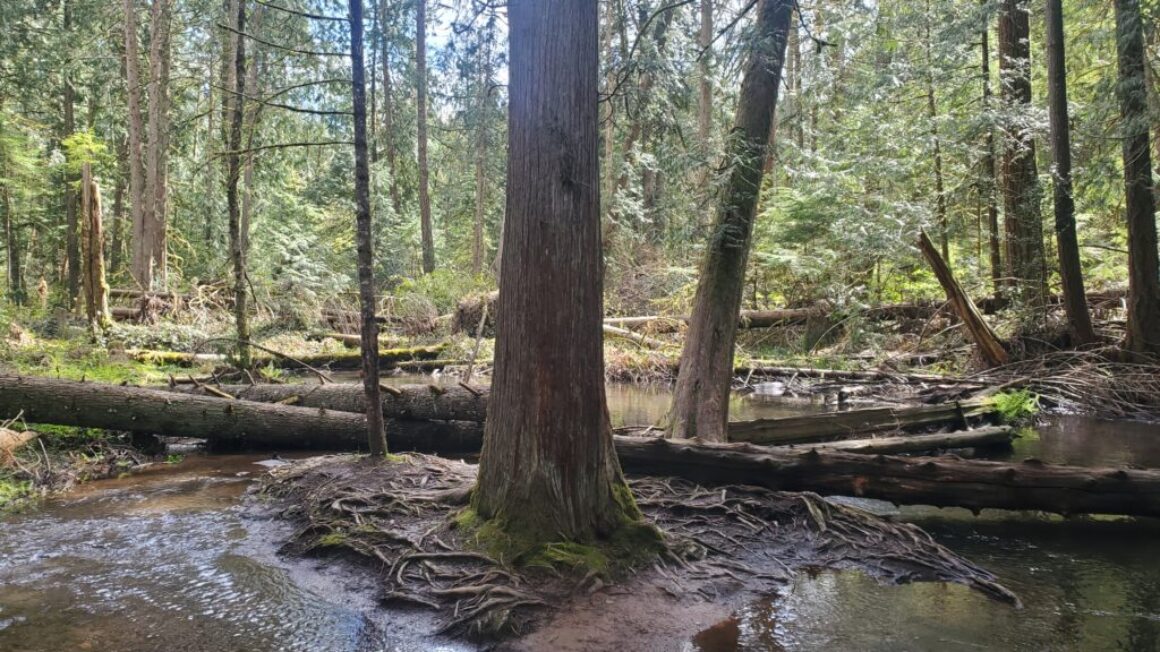
Tickle Creek is a treasured green corridor winding through Sandy—home to large trees, vine maple understory, carpets of native ferns and oxalis, and abundant wildlife. Coyotes, songbirds, and even the occasional bear or cougar move through this habitat. But in recent years, the corridor has experienced:
-
Expanding invasive plants like blackberry, ivy, holly, and knotweed
-
Tree loss accelerated by climate stress and adjacent land use
-
Erosion and soil compaction from unofficial trails
-
Reductions in shade and bank stability, affecting water quality
Because this stretch of creek is located just upstream of Sandy’s wastewater treatment plant, improving riparian health here provides meaningful water quality benefits.
Project Goals
Funded through a Supplemental Environmental Project (SEP), this restoration spans roughly 37 acres between 362nd Ave and Highway 211. CRBC and partners are working toward three primary goals:
1. Reduce Non-Native Invasive Plants
A combination of mechanical and chemical treatments began in 2023 and continues today. This includes the removal of blackberry, ivy, holly, and knotweed throughout the corridor. Spot treatments will continue into 2026 as needed.
2. Increase Native Trees and Shrubs
In winter 2025, we began planting new native species throughout the project area. Over the life of the project, we expect to install up to 18,500 native trees and shrubs, with a special emphasis on shade-providing conifers like Western redcedar and Douglas-fir. These plantings help stabilize streambanks, reduce summer stream temperatures, and restore long-term forest health.
3. Repair Off-Trail Disturbances
Unmarked side trails and trampled areas have contributed to erosion along the creek. These areas are being restored through mulching, soil rehabilitation, log and debris placement, and strategic planting. Closures and repairs began in fall 2023 and continue as community use evolves.
Project Timeline: How Tickle Creek Is Being Restored
2023 — Laying the Groundwork
We kicked off the project with site assessments, planning, and the first big push to remove invasive blackberry, ivy, holly, and knotweed. We also closed unofficial trails that were damaging the creekside habitat.
2024 — Clearing and Preparing
Invasive plant removal continued through the year, opening space for native plants to return and helping the forest floor recover. Community outreach and engagement grew during this phase.
2025 — Planting Begins
Winter 2025 brought the exciting part: planting thousands of native trees and shrubs along Tickle Creek. Follow-up care and maintenance started in spring and will continue through 2026 to help these young plants thrive.
2026 — Seeing the Results
By fall 2026, we’ll have our first full year of growth to look back on. Photo-point monitoring will show how the landscape is changing and where extra care may be needed.
2027–2028 — Long-Term Growth
We’ll continue monitoring and light maintenance as the young forest matures. In fall 2028, we’ll check our photo points again to document the transformation and measure long-term success.
A Healthier Future for Tickle Creek
This $200,000 SEP-funded effort is an investment in cleaner water, healthier habitat, and a more resilient greenspace for Sandy residents. CRBC manages restoration and early-stage maintenance, while the City of Sandy will continue long-term care after the project ends.
Together—with youth crews, volunteers, and partners—we’re helping Tickle Creek thrive again.