Honoring Indigenous Connections to the Clackamas River
For generations, Indigenous peoples have lived along and cared for the Clackamas River and the lands and waters of its watershed. Traditional artwork and carvings once stood along riverbanks throughout the basin, but few of these visible reminders remain today.
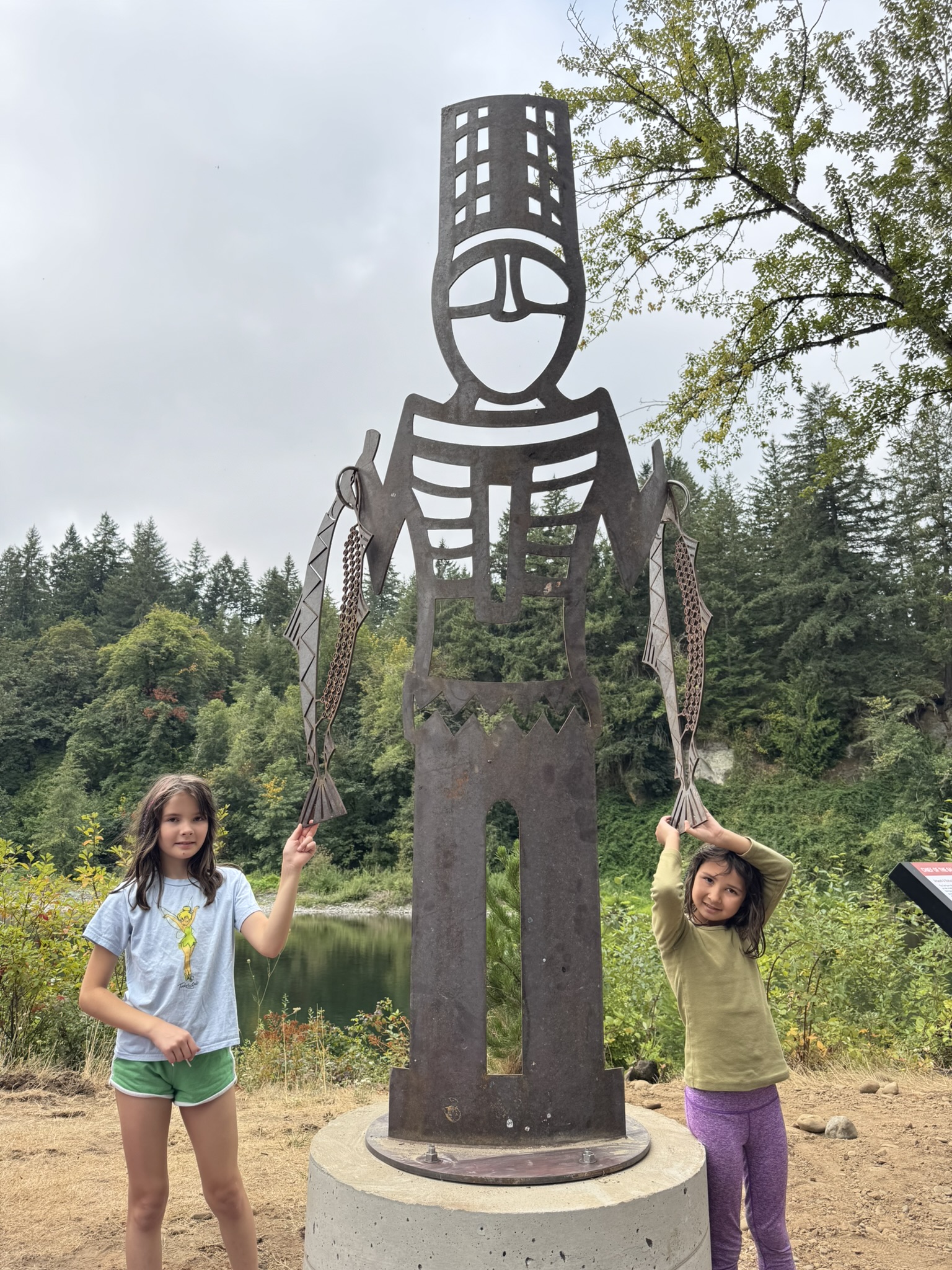
The Clackamas River Basin Council (CRBC) is working to help restore that visible connection through a series of Indigenous artworks installed at public parks along the river. Created by traditional carver and Confederated Tribes of Grand Ronde member Bobby Mercier, the sculptures invite visitors to learn more about the Indigenous history and enduring cultural connections of the Clackamas River watershed.
Three sculptures are installed at parks along the river:
- Milo McIver State Park
- Barton Park
- Riverside Park
Together, the installations create opportunities for visitors to encounter Indigenous artwork while spending time along the Clackamas River.
Connecting people to the river
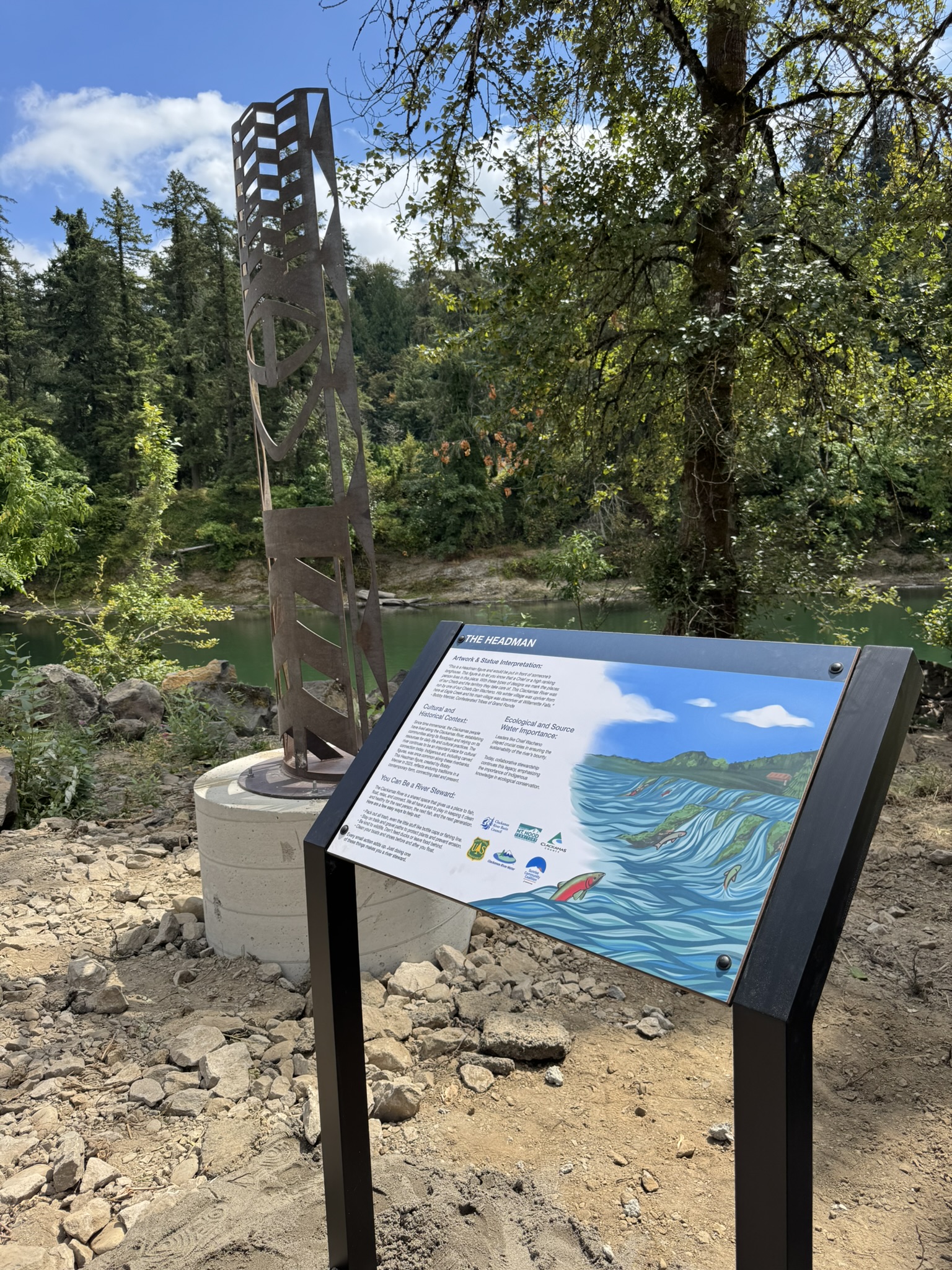
The project is about more than adding artwork to public spaces. The sculptures and accompanying interpretive panels are intended to make Indigenous history and cultural connections more visible in places where people gather, recreate, and experience the river.
The interpretive panels share information about the cultural and ecological history of the Clackamas watershed, helping visitors understand that these lands and waters have long been connected to Indigenous peoples and communities.
By bringing this history into public spaces, the project creates opportunities for learning and reflection while encouraging a deeper sense of connection and responsibility for the watershed.
The artwork
Bobby Mercier is a traditional carver and a member of the Confederated Tribes of Grand Ronde. He created the sculptures as an independent artist through Bear Tracks. His work brings Indigenous artistry into public spaces along the Clackamas River and provides visitors with an opportunity to encounter contemporary Indigenous artwork in the watershed.
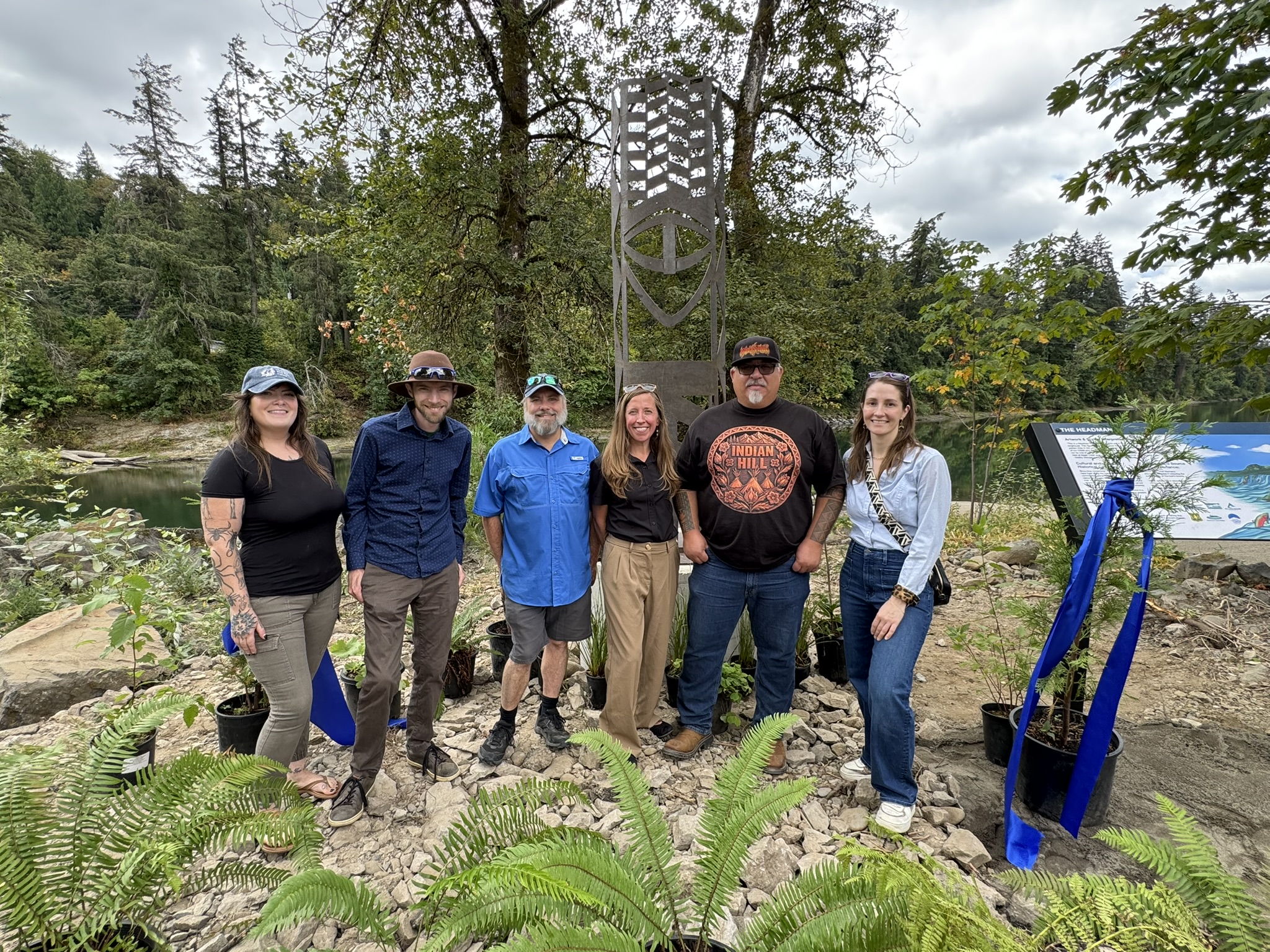
At Riverside Park, Mercier’s sculpture, The Headman, was dedicated during a ribbon-cutting ceremony on August 12, 2026. The celebration included Bobby Mercier and a drum and song performance by the Agency Creek Singers.
The sculptures at Barton Park and Milo McIver State Park extend this opportunity farther upstream, creating a series of places where visitors can encounter Indigenous artwork as they travel along the Clackamas River.
Art, history, and stewardship
The Clackamas River is both an important ecological resource and a place with deep cultural connections. Making Indigenous history more visible is one way to help visitors understand that relationship and consider what it means to care for a watershed that has sustained people for generations.
The project also supports CRBC’s broader work to connect communities with the Clackamas River through education, restoration, and stewardship. By combining artwork, interpretation, and opportunities to experience the river, the project creates space for people to learn about the watershed’s past while thinking about its future.
Our hope is that these installations encourage curiosity, respect, and a stronger connection to the Clackamas River and the people, plants, animals, and communities that depend on it.
A growing cultural connection along the river
The sculptures are part of a larger effort to create more inclusive public spaces and increase awareness of the Indigenous history of the Clackamas River watershed. They also contribute to the region’s recognition of its Native American cultural heritage and create new opportunities for visitors to learn while exploring the river.
We are grateful to the artists, partners, funders, and community members who helped bring this project to life.
Funding for the project includes a $56,699 Strategic Investment Grant from Oregon’s Mt. Hood Territory, along with support from the Sunrise Community Coalition, the Drinking Water Provider Partnership, and the U.S. Forest Service.
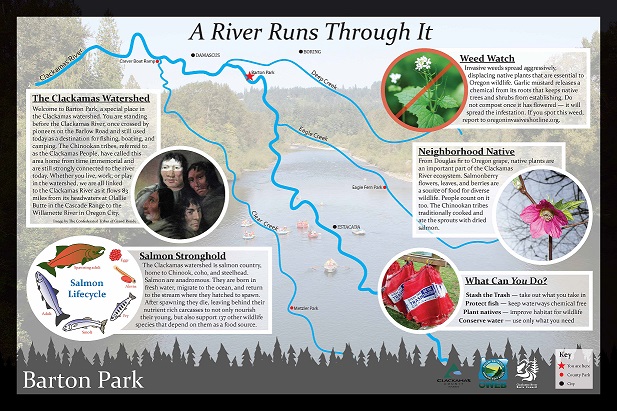
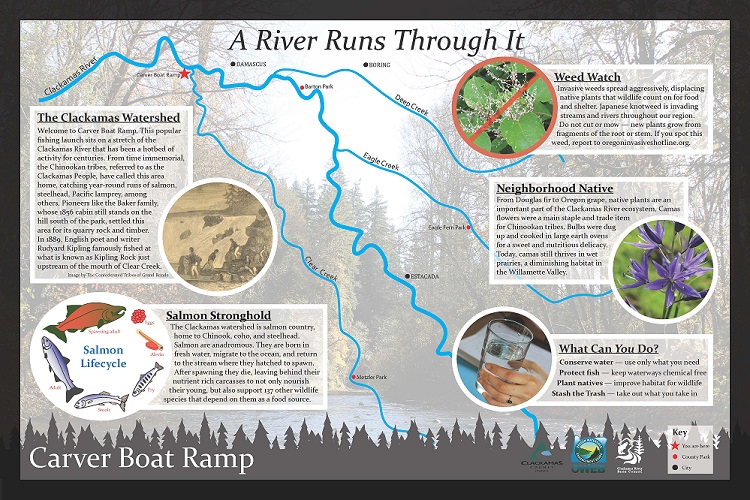
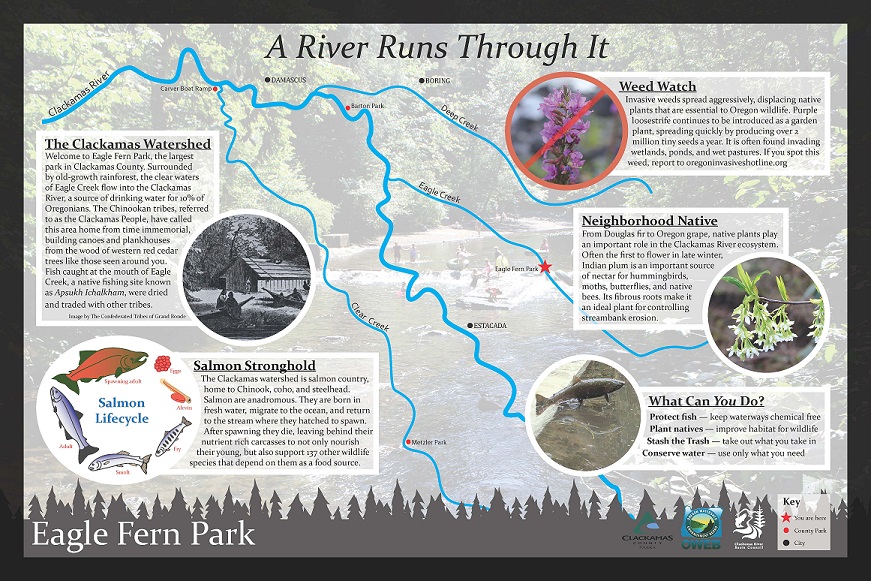
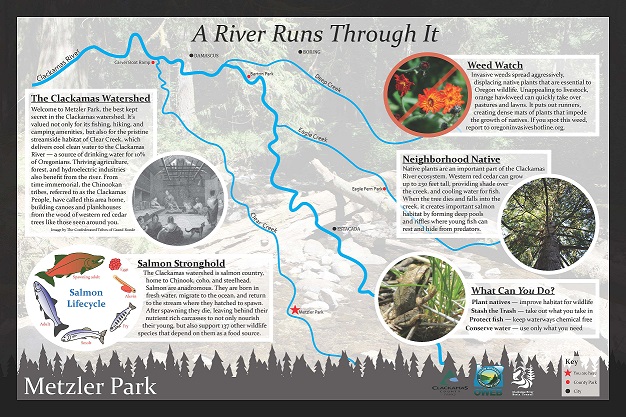
CRBC designed the signs to educate park users about the Clackamas watershed, history and natural heritage of the region, salmon life cycle and habitat needs, native and invasive plants, and how individuals can support watershed health. Signs can be found at Barton Park, Carver Boat Ramp, Eagle Fern Park, and Metzler Park.
Thank you to our partners involved in this project including Clackamas County Parks, OWEB, ODFW, Clackamas County SWCD, and the Confederated Tribes of Grande Ronde and Warm Springs.
Email info@clackamasriver.org with questions or feedback on this project.
Interpretive Signage
The Clackamas River Basin Council has created a series of permenant interpretive signs along the Clackamas River. CRBC designed the signs to educate park users about the Clackamas watershed, history and natural heritage of the region, salmon life cycle and habitat needs, native and invasive plants, and how individuals can support watershed health. Signs can be found at Barton Park, Carver Boat Ramp, Eagle Fern Park, and Metzler Park.
Thank you to our partners involved in this project including Clackamas County Parks, OWEB, ODFW, Clackamas County SWCD, and the Confederated Tribes of Grande Ronde and Warm Springs.
Email info@clackamasriver.org with questions or feedback on this project.